“Care Circles: Mobilize Your Personal Expert Advisory Team” (Ari Akerstein) [#213]
Brad Power
September 30, 2026
“The people that tend to get the best outcomes, the most correct outcomes, [with] less likelihood of missing potential treatments or options that are on the table are the people that engage a broader circle of people that can help inform whatever their next decisions actually are.” – Ari Akerstein
“The medical system is essentially set up as a single player game, or like the opposite of a team sport. And we see cancer as more closely akin to a team sport.” – Ari Akerstein
Abstract
When navigating a cancer diagnosis, treating the journey as a team sport rather than a single-player game is the key to unlocking the best possible health outcomes. By mobilizing a "Care Circle" (a broad, collaborative network of personalized experts, molecular biologists, and multi-institutional advisors) patients and caregivers can ensure no stone is left unturned and no cutting-edge treatment option is missed. Ari Akerstein delivers a clear roadmap for taking control of your data, crowdsourcing elite scientific insights, and actively transforming your medical team into a powerhouse advisory board built around your personal priorities and quality of life.
Meeting Summary
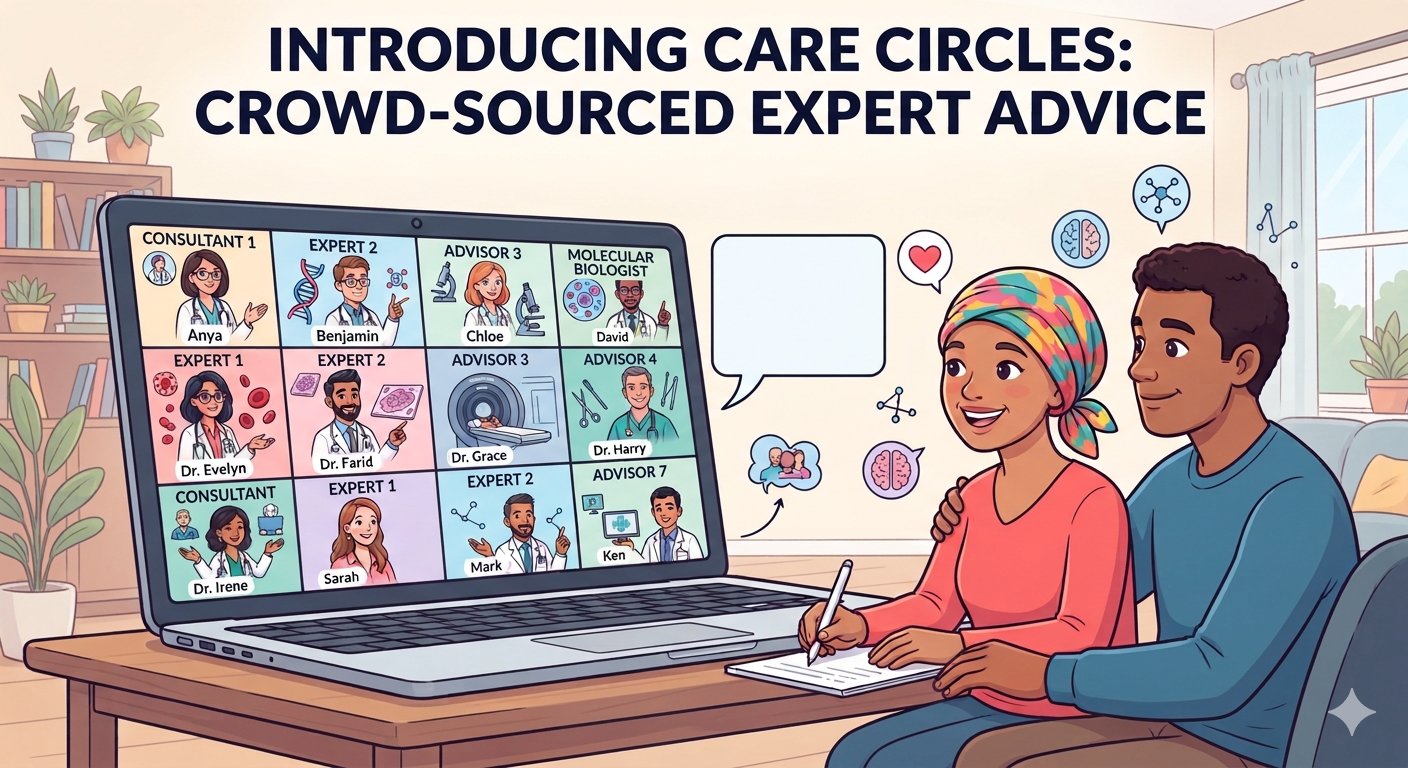
When navigating a complex cancer diagnosis, families are often forced to confront two overwhelming hurdles at once: the grueling challenge of securing timely, expert medical opinions and the emotional exhaustion of constantly repeating traumatic updates to loved ones. To address these challenges, you can build a highly personalized medical advisory team alongside a strong friends-and-family support network to actively guide your care.
Ari Akerstein, co-founder and CEO of opencancer.ai, shared practical frameworks for bringing your own chosen specialists, advisors, and trusted inner circle together into a single, unified advisory team. Instead of navigating conflicting data solo or waiting months for institutional approvals, you can leverage the collective wisdom of your personal board of experts to answer your most critical questions. Centering your care around a dedicated network of people eliminates communication fatigue, protects your emotional energy for healing, and transforms you from a passive recipient of care into the confident leader of your own world-class medical team.
Why should you create your personal medical advisory team and friend and family network?
Help you navigate complex cancer decisions with a trusted support team
Identify questions or options you may have missed by getting different perspectives
Get emotional support during stressful or uncertain periods by leaning on people you trust
Organize information and keep loved ones updated by sharing the workload
Choose who to involve and when by explicitly creating a list
Use your network alongside your medical team to complement their medical advice
How can you set up your personal medical advisory team and friend and family network?
Choose your circle: Include your medical team, trusted people with relevant expertise, and supportive friends or family.
Start small: Invite only the people you’re comfortable sharing with; expand the circle when you’re ready. Start with people who are rational, less emotional, to help you think through your options, especially before you have a treatment plan.
Create a case in OpenCancer.ai’s Care Circles.
Add medical records and details: Review the AI-generated summary and correct anything outdated or inaccurate.
Invite people and set permissions for what they can view or update.
Share updates and questions in the discussion space. A caregiver can help keep information current.
Use the resources area to explore relevant services and options.
Keep your medical team involved: Care Circles help organize support and information; they doesn’t replace professional medical advice.
How should you work with your personal medical advisory team and friend and family network?
Choose people you trust and feel comfortable telling
Build a balanced team: clinicians, knowledgeable friends, and thoughtful generalists
Be clear about what help you need and what advice or questions you don’t want
Share information and tasks with a caregiver or trusted point person when possible
Use your circle to prepare questions and consider options, not to replace your medical team
Protect your privacy, energy, and control over who’s involved
How can you learn more about personal medical advisory teams and friend and family networks?
Try Care Circles on OpenCancer.ai: Set up a case to explore how Care Circles can help you invite family, friends, and experts, share medical records, and coordinate discussion.
Contact Ari Akerstein at ari@opencancer.ai: Ask him about getting started or using the tool. He can help troubleshoot setup questions.
Review Cancer Patient Lab meetings about forming a personal medical advisory team or friend-and-family network, such as:
The information and opinions expressed on this website or platform, or during discussions and presentations (both verbal and written) are solely for educational purposes and are not intended as health care recommendations or medical advice by Cancer Patient Lab, its principals, presenters, participants, or representatives for any medical treatment, product, or course of action. You should always consult a doctor about your specific situation before pursuing any health care program, treatment, product or other course of action that might affect your health. This summary was prepared with the assistance of transcription and AI-assisted editing tools and was reviewed by Cancer Patient Lab staff.
For the video recording, please see here.
For a transcript of the conversation, please see here.